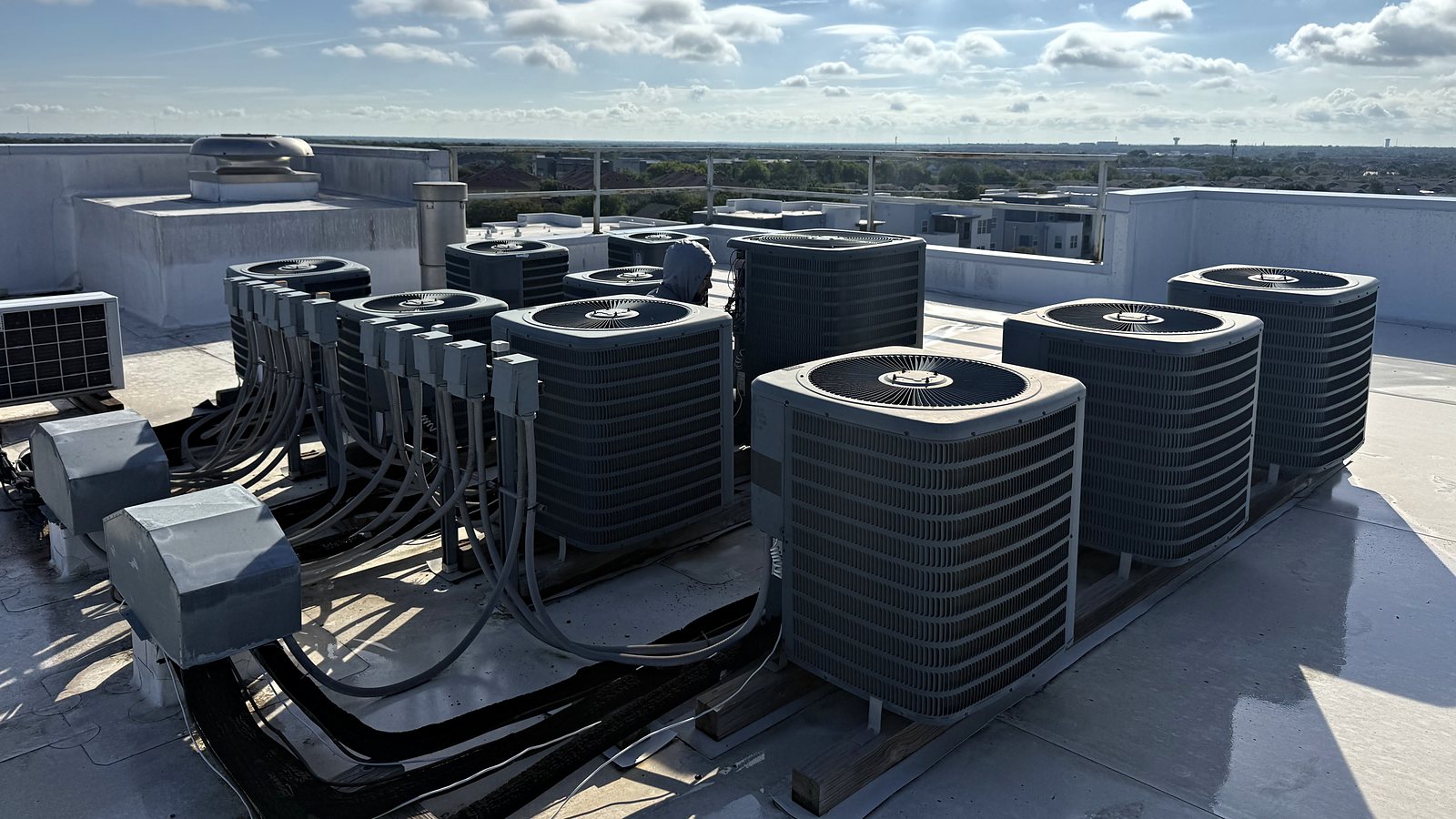
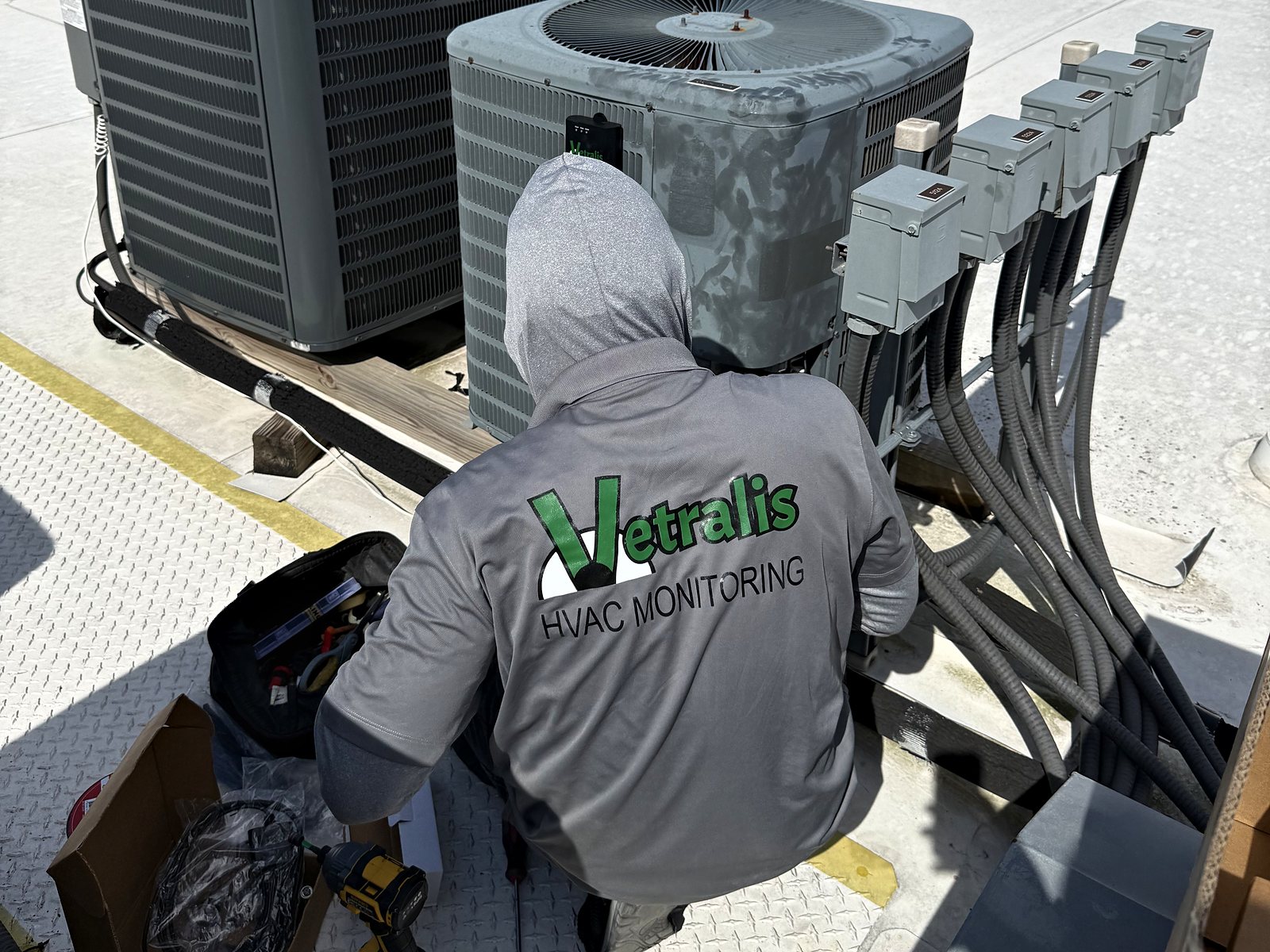
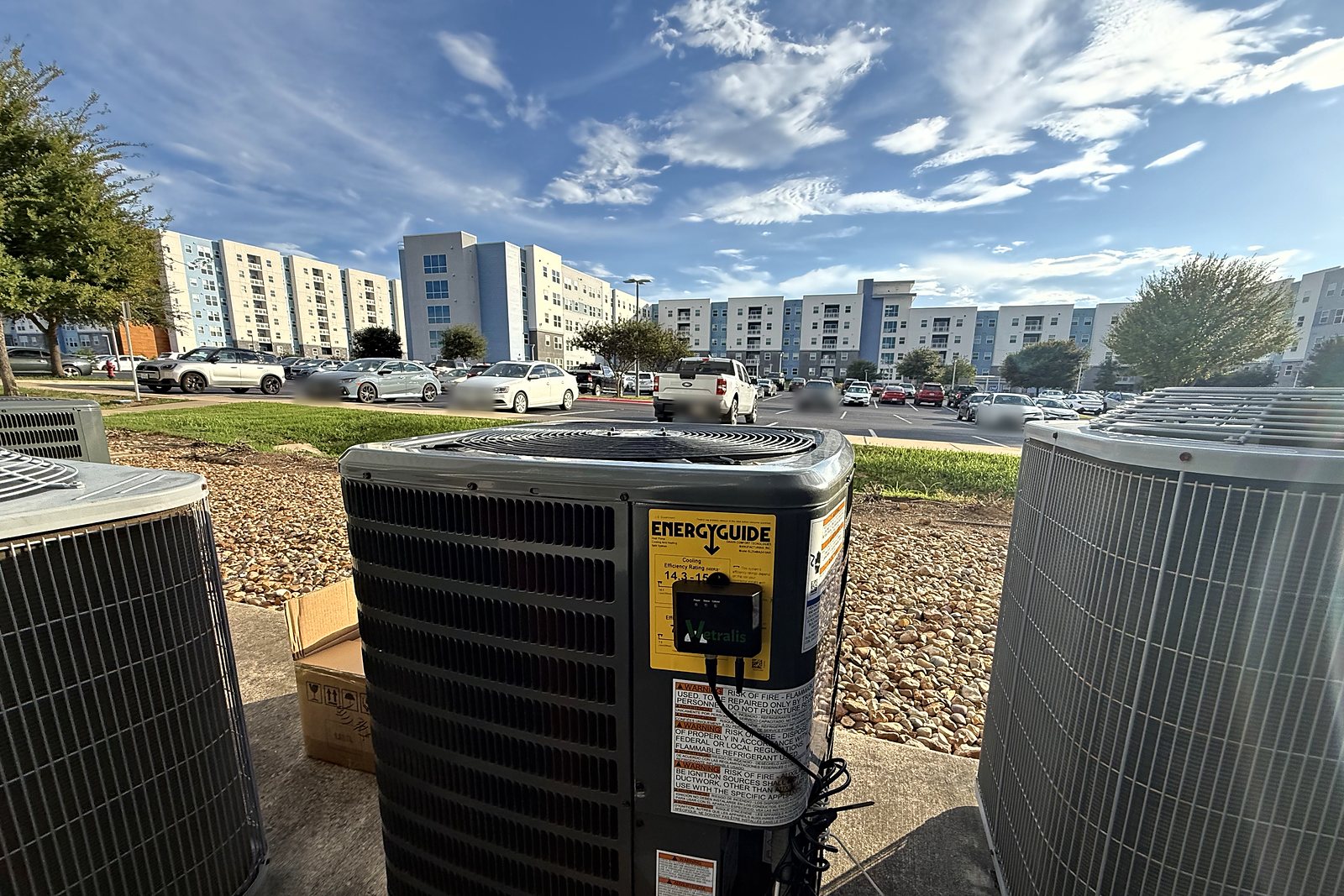
Last Thursday, 10 September, we installed thirty Vetralis monitors at Park West in College Station: 1,316 apartments and more than 3,400 beds on the Texas A&M campus. Twenty of the thirty condensers we worked on sit on rooftops. We started at nine in the morning, and the last unit was reporting a little after seven that evening.
I am grateful to The Michaels Organization, which manages the property, and to the maintenance team who walked the site with us. Inviting someone to put instruments on your equipment is how you find things out, and not every operator is willing to do it.
Thirty systems took a full day, with a crew and a plan. Park West has more than a thousand. That arithmetic rode home with me for three hours.
Apartments are not skipping maintenance. They cannot scale it.
The easy story is that apartment operators neglect their equipment. That is not what I saw, and it is not what the research says. Seventy percent of operators say they have a formal preventive maintenance program, yet a Ball State University study reported by the National Apartment Association found maintenance teams spend only about 18% of their time on preventive work. Most of the rest goes to repairs that cannot wait.
It is easy to see why. Preventive maintenance on a calendar means visiting every system whether or not anything is wrong with it. Two visits a year across more than a thousand systems is more than two thousand technician visits, most of them to equipment that is working fine, and at a property like this a great many of them on a roof. On a July afternoon those visits lose to the residents whose air conditioning has quit. And the payoff is nearly invisible: the labor shows up on this month's budget, while the compressor that did not fail three years from now never shows up anywhere.
So the money goes to replacement instead
Harvard's Joint Center for Housing Studies tracked what U.S. rental-property owners spent between 2009 and 2019. Capital improvements such as replacement projects more than doubled, to $57 billion. Routine maintenance rose by just $1 billion, to $22 billion. That covers all rental housing, not HVAC alone, but the shape is hard to miss.
The equipment is built to last far longer than it does. Fannie Mae's multifamily useful-life tables, which property condition assessments are written against, give a roof- or pad-mounted condenser a standardized average useful life of 20 years. Pulling together the published research, the data I have been able to find and what I have seen on sites, my estimate is that apartment HVAC systems are being replaced at around 11 years. That is an estimate, not a measured figure, but the gap between those two numbers is the reason I wrote this.
Maintenance works. Delivering it is the problem.
The evidence that maintenance pays in apartments is good. NAA described a 244-unit West Texas property that started cleaning its coils, checking condenser panels and refrigerant caps, and changing air-handler filters every six months.
So operators are not wrong that maintenance works. They are stuck on the cost of delivering it the traditional way: a technician, a set of gauges and a ladder at every system, twice a year, to find the minority that actually need attention.
Visit the systems that need it
That is what monitoring changes. A Vetralis monitor mounts on the outdoor unit and reads refrigerant pressure and line temperature on both lines around the clock, over its own cellular connection. There is nothing inside the apartment and no resident to schedule. It alerts when a system moves outside its normal operating range.
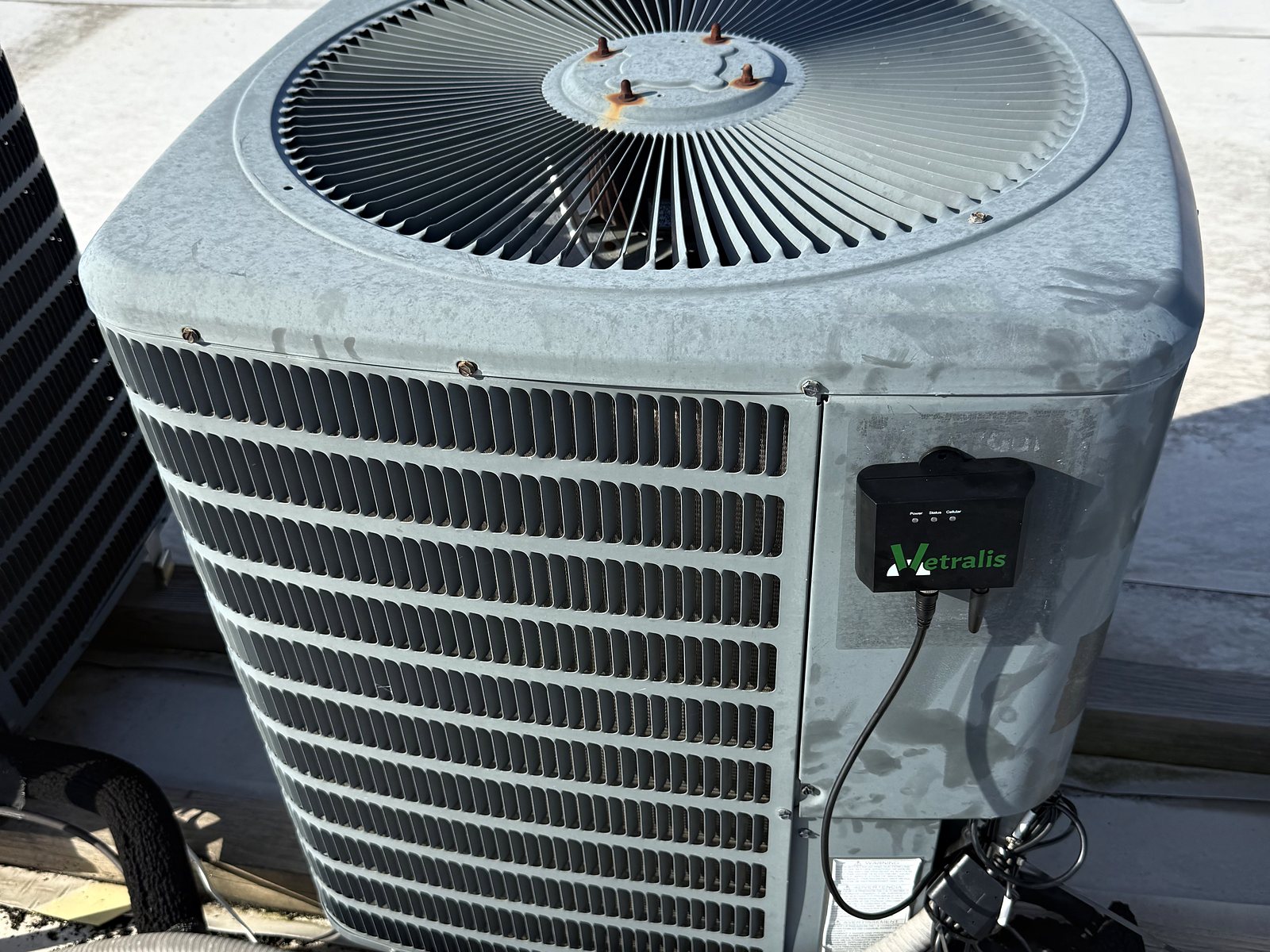
Instead of sending gauges to every condenser on a calendar, the maintenance team sends a technician to the systems that are drifting, with a description of what moved before anyone climbs a ladder. The healthy systems, which is most of them most of the time, no longer need a trip to prove they are healthy. Problems can be caught while they are still repairs, and the maintenance program finally has a record of what it found and what each problem was costing to run.
It does not replace maintenance. Filters still need changing and coils still need cleaning. It changes which systems get the expensive part of it, and when.
What happens next
The thirty monitors at Park West went live on Thursday. I am not going to share findings from a few days of data. A fault that holds up across weeks of changing weather is a fact; a few September afternoons on a hot roof are not. When there is something worth saying, and the property is comfortable with it being said, I will write it up.
What I already know is what I kept thinking about on the drive home. Thirty systems took a full day. Park West has more than a thousand. A maintenance model that asks a technician to visit every one of them to find the few in trouble was never going to scale, and that is not the technicians' fault.
Sources
- Willis, National Apartment Association — The 411 on the ROI of Preventive Maintenance (4 Dec 2023) — Ball State University study: about 18% of maintenance time on preventive work, most on immediate repairs; 70% of operators report a formal preventive program
- Harvard Joint Center for Housing Studies — America's Rental Housing 2022 — p.21: capital improvements $23B to $57B over 2009–2019; routine maintenance up $1B to $22B. All rental housing, not HVAC-specific
- Fannie Mae — Form 4099.F, Estimated Useful Life Tables (Aug 2019) — standardized average useful life of a pad/roof condenser: 20 years for multifamily, seniors and students
- Pike, National Apartment Association — How to Improve Maintenance Efficiency (1 Feb 2021) — 244-unit West Texas property: AC service calls down 26% after a twice-yearly preventive program
- The Michaels Organization — Michaels Assumes Management of Park West Student Living Community — 1,316 units
- Around 11 years: the author's estimate — drawn from published research, available data and site experience; an estimate, not a measured figure
- Vetralis installation at Park West, College Station, 10 September 2026 — first-party: 30 monitors installed in one day, 20 on rooftops
Vetralis is a monitoring and alerting product. It is not a substitute for professional maintenance or inspection, and it cannot detect every possible fault in an HVAC system. Vetralis does not guarantee that any particular failure will be detected or prevented.
A check-engine light for the equipment you can't see
Vetralis mounts on your outdoor unit and watches refrigerant pressure and line temperature around the clock, alerting you when readings drift out of normal. Professionally installed, no monthly fees.
See pricing